What to bring
Whatever you have available.
- Brooms
- Large buckets
- Spades
- Dustpans and brushes
- Mesh bags
- Sieves, colanders
- Heavy-duty bin bags
- Wear wellies and gloves
- Labels stating “volunteers collected” — labelling with tape and marker will suffice
- Dress appropriately depending on weather conditions
How to collect
Avoid treading nurdles into the sand as best you can.
Get out after high tide, every day if you can, and focus on clearing nurdles left at the high tide line.
DON'T STEP ON THE NURDLES! (We can't emphasise this enough)
Wear gloves (and wash your hands when you're finished).
Use sweeping brushes and/or dustpan and brush to collect the nurdles (see tips on techniques below).
If possible/appropriate, leave the filtering to more experienced volunteers and focus on collecting.
Bag nurdles into heavy-duty bin bags, label with 'volunteer collected', secure and leave at closest council-recommended collection point. (Report bags that are not at a collection point.)
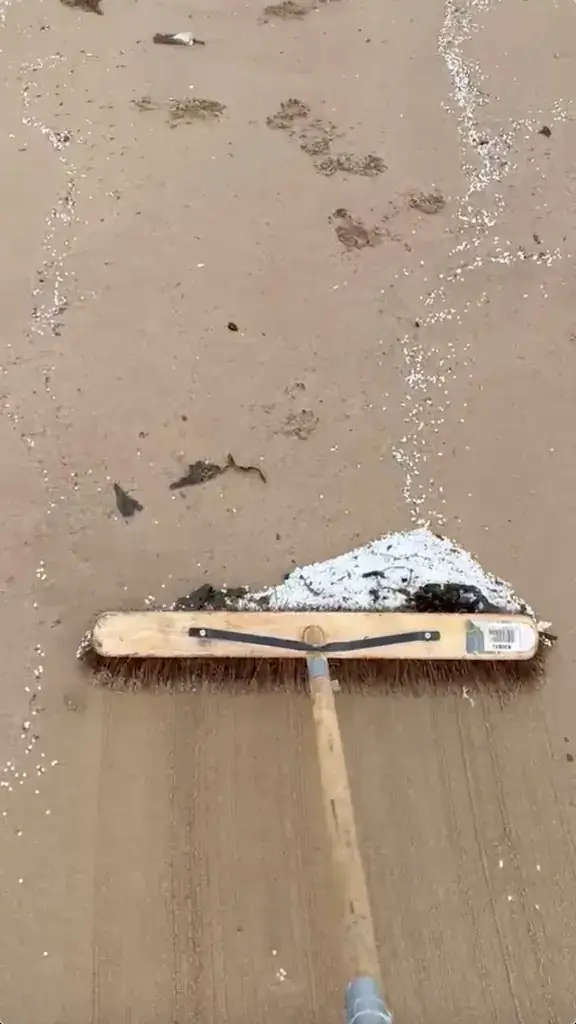
Scrape nurdles up from wet sand
- Use a flat broom, back of rake or even plank of wood
- Carefully scrape up the lines of nurdles
- Sweep up nurdles and place in labelled bin bag
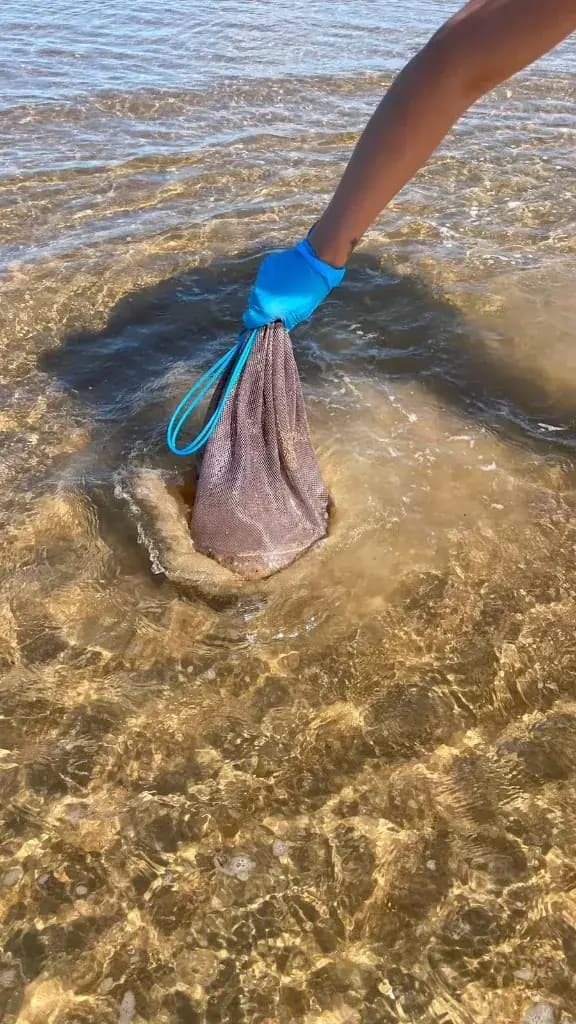
Mesh filter bag method
- Scoop the top layer of sand and nurdles with a spade.
- Put the mix into a mesh bag and wash it in seawater so sand falls through and nurdles stay in the bag.
- Empty nurdles into a strong bin bag labelled as a volunteer collection.
Do not overload the bags - wet sand is heavy, and will stretch even the strongest mesh. Better to do two trips with smaller loads down to the waterline, than one trip which stretches a bag out.
Use small bags for carrying directly into the surf, bigger bags for fitting over a trug or bucket.
If you find Nurdles are passing through mesh bags, use those bags for seaweed capture instead, stretched over a bucket
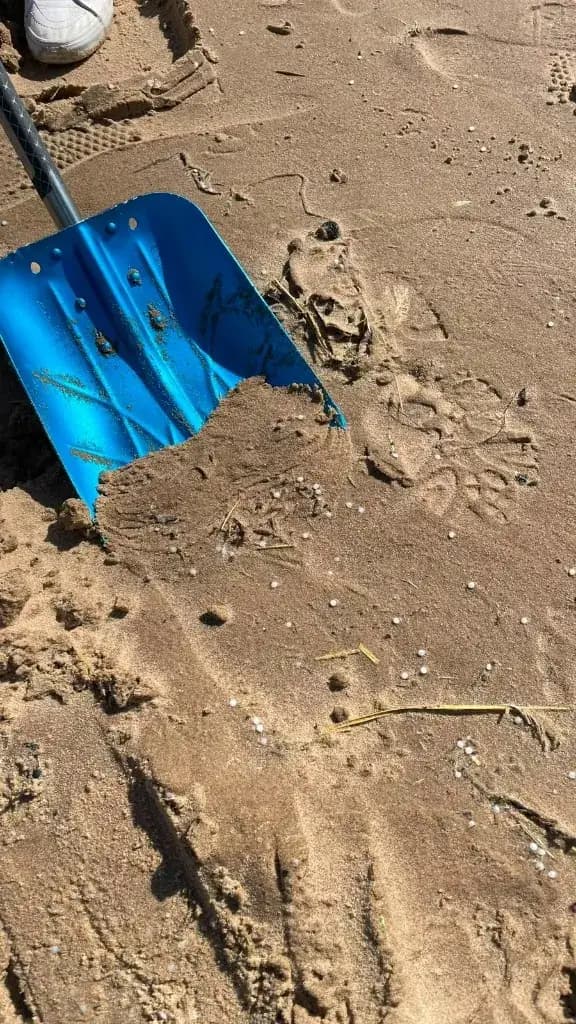
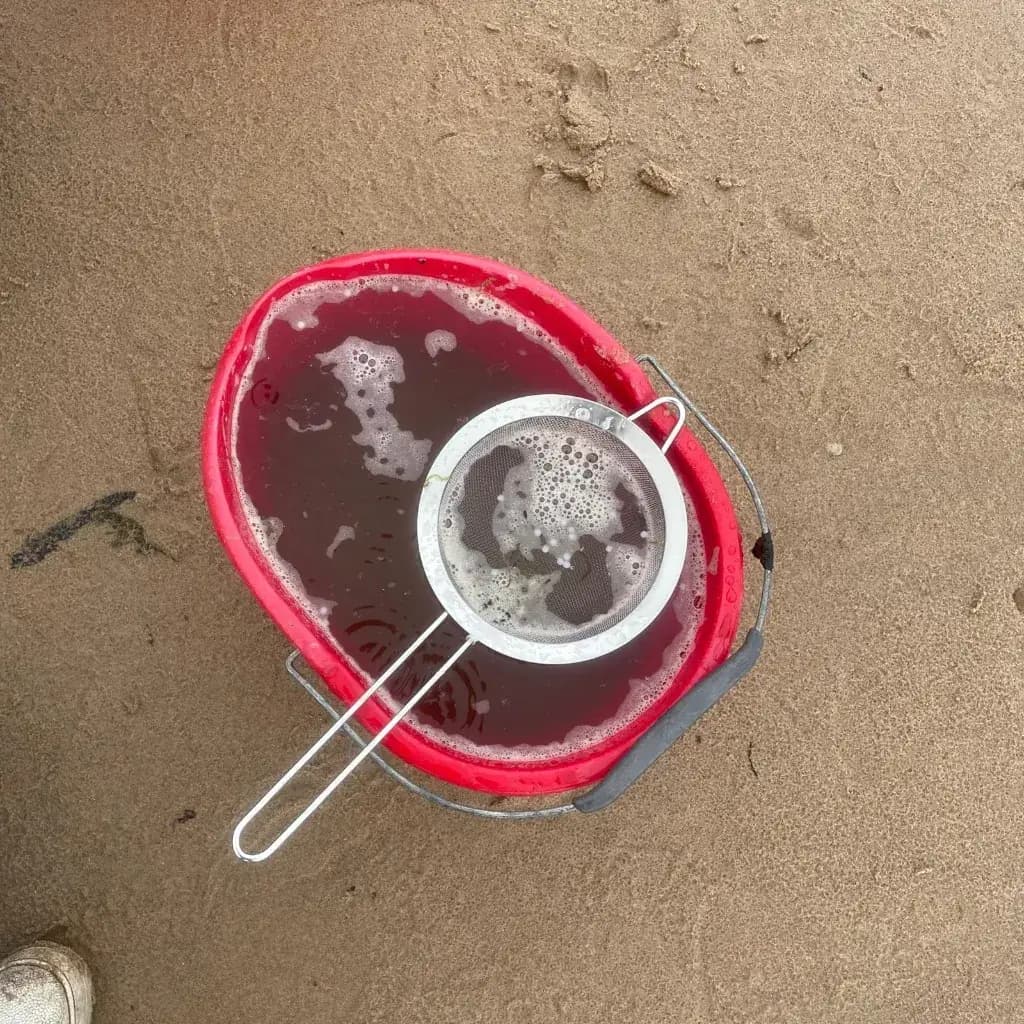
Bucket and sieve method
- Collect a bucket of sea water.
- Shovel sand (or seaweed) and nurdles mix into the bucket.
- When the nurdles float to the top, scoop them off with a sieve.
- Add the nurdles to a strong bin bag.
- When your bucket is full of sand, empty and refill with sea water.
- Shaking the seaweed releases the nurdles — then scoop them up and remove the sand.
Sift nurdles in dry sand with mesh bag
Keep work manageable
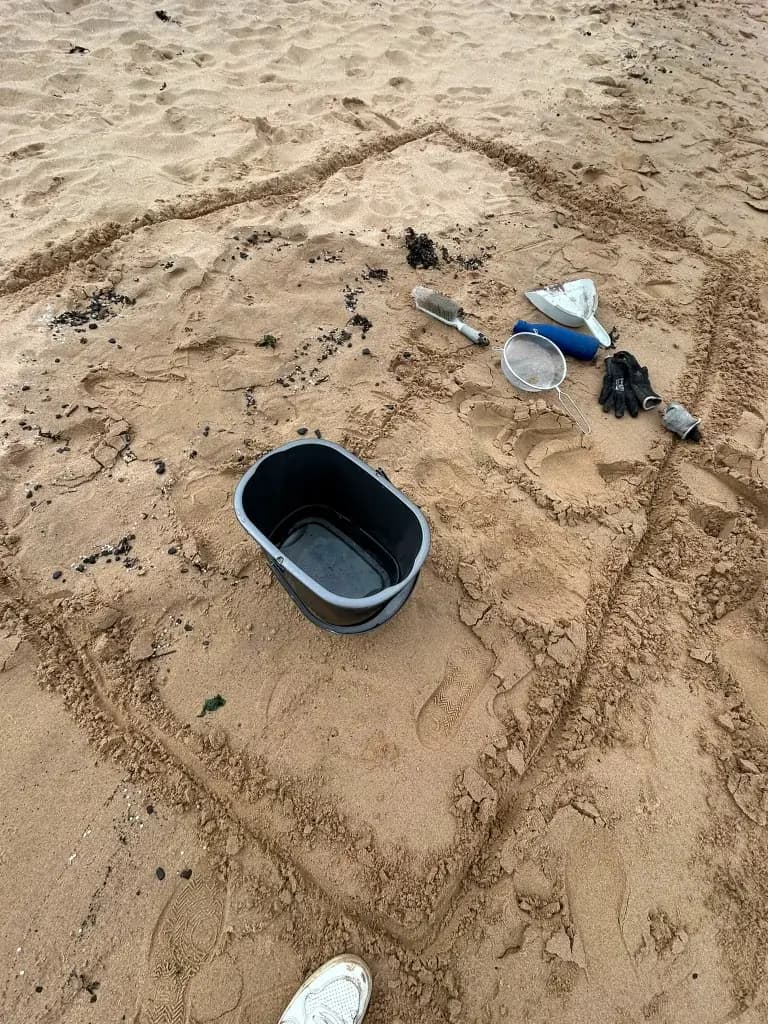
Draw a square in the sand to work on, complete it, move on and repeat. Keeps the task bitesize and measurable.
Mesh bag tutorial
This quick video provides guidance on sewing mesh bags to filter out the sand and seawater, leaving the plastic pellets in the bag. We have a dedicated WhatsApp group for volunteers sewing mesh bags.
Mesh bag WhatsApp group
Protect our ecosystems when collecting Nurdles
On digging
Please avoid digging or taking mechanical approaches.
Wet sand
The damp intertidal band (the sand exposed between tides) is the most biologically productive part of the beach. It is packed with burrowing infauna — lugworms, ragworms, cockles, tellins, razor clams, sandhoppers — which are the main food supply for wading birds and inshore fish. Turning or excavating this sand kills and exposes those buried animals directly, and it flips oxygen-poor sediment up to the surface.
Move and remove as little seaweed as possible.
Seaweed is a vital part of our beach ecosystem. It's home to lots of helpful tiny life forms and the local birds too! Pick it up, shake it into a bucket to catch nurdles, remove nurdles from under it, and put it back.
FAQs
Is it safe to collect?
Where do filled bags go?
When should I go?
How do I press the council to do more?
Who runs this cleanup?
Live tide times from tidetimes.co.uk.