Beach cleanup
Community message
- Please don’t wait to be organised or be told the perfect way to do this.
- If you are heading down and want help, ask in the WhatsApp group — but this is community-led grassroots stuff, so just get stuck in!
- This next week is crucial, so people are doing what they can when they can. Times for Monday and Tuesday have been suggested at 5am–8am and 4pm–6pm, but anytime is good.
- Basic tools required are sieves / dustpan and brushes, and bin bags. People are making mesh sieves, but they are not essential.
- After high tide is optimal — clear the tide line before it gets washed out again.
- Anything collected should ideally be bagged and left by council bins, marked as volunteer collections.
- Photos of what you’ve collected should ideally be posted in the PHOTOS ONLY group of the WhatsApp community, in case we need evidence later on.
- Good is better than perfect in a crisis — do what you can when you can. Just don’t trample nurdles into the sand.
- Submit your findings with The Great Nurdle Hunt
Today's tide times for North Shields, England
Live widget powered by tidetimes.co.uk.
What to bring
Whatever you have available.
- Brooms
- Large buckets
- Spades
- Dustpans and brushes
- Mesh bags
- Sieves, colanders
- Heavy-duty bin bags
- Wear wellies and gloves
- Labels stating “volunteers collected” — labelling with tape and marker will suffice
- Dress appropriately depending on weather conditions
How to collect
Avoid treading nurdles into the sand as best you can.
From community organiser guidance — methods are also discussed on the WhatsApp group.
- Step 1.
Get out after high tide, every day if you can, and focus on clearing nurdles left at the high tide line.
- Step 2.
DON'T STEP ON THE NURDLES! (We can't emphasise this enough)
- Step 3.
Wear gloves (and wash your hands when you're finished).
- Step 4.
Use sweeping brushes and/or dustpan and brush to collect the nurdles (see tips on techniques below).
- Step 5.
If possible/appropriate, leave the filtering to more experienced volunteers and focus on collecting.
- Step 6.
Bag nurdles into heavy-duty bin bags, label with 'volunteer collected', secure and leave at closest council-recommended collection point. (Report bags that are not at a collection point.)
Collection points
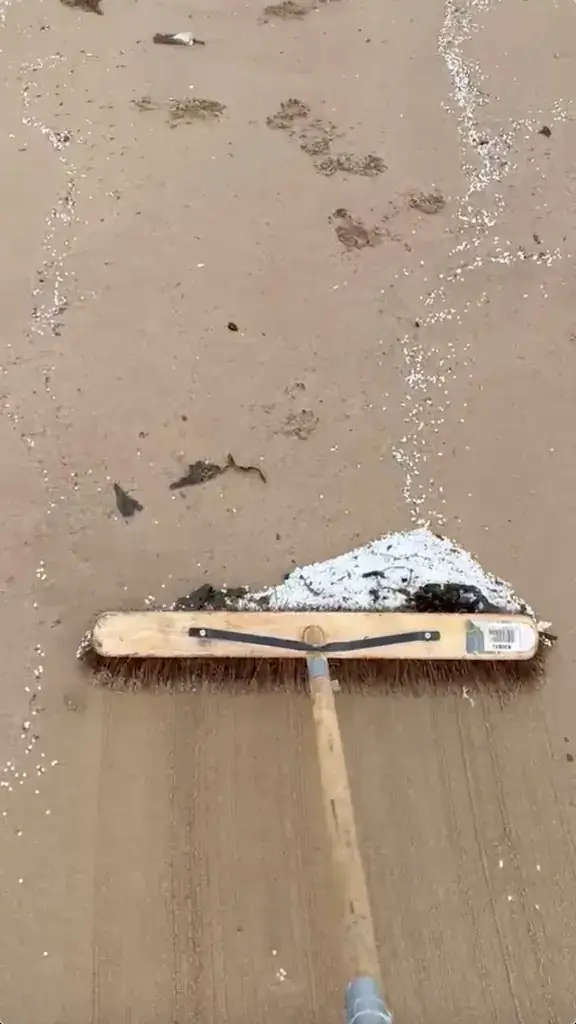
Scrape nurdles up from wet sand
- Use a flat broom, back of rake or even plank of wood
- Carefully scrape up the lines of nurdles
- Sweep up nurdles and place in labelled bin bag
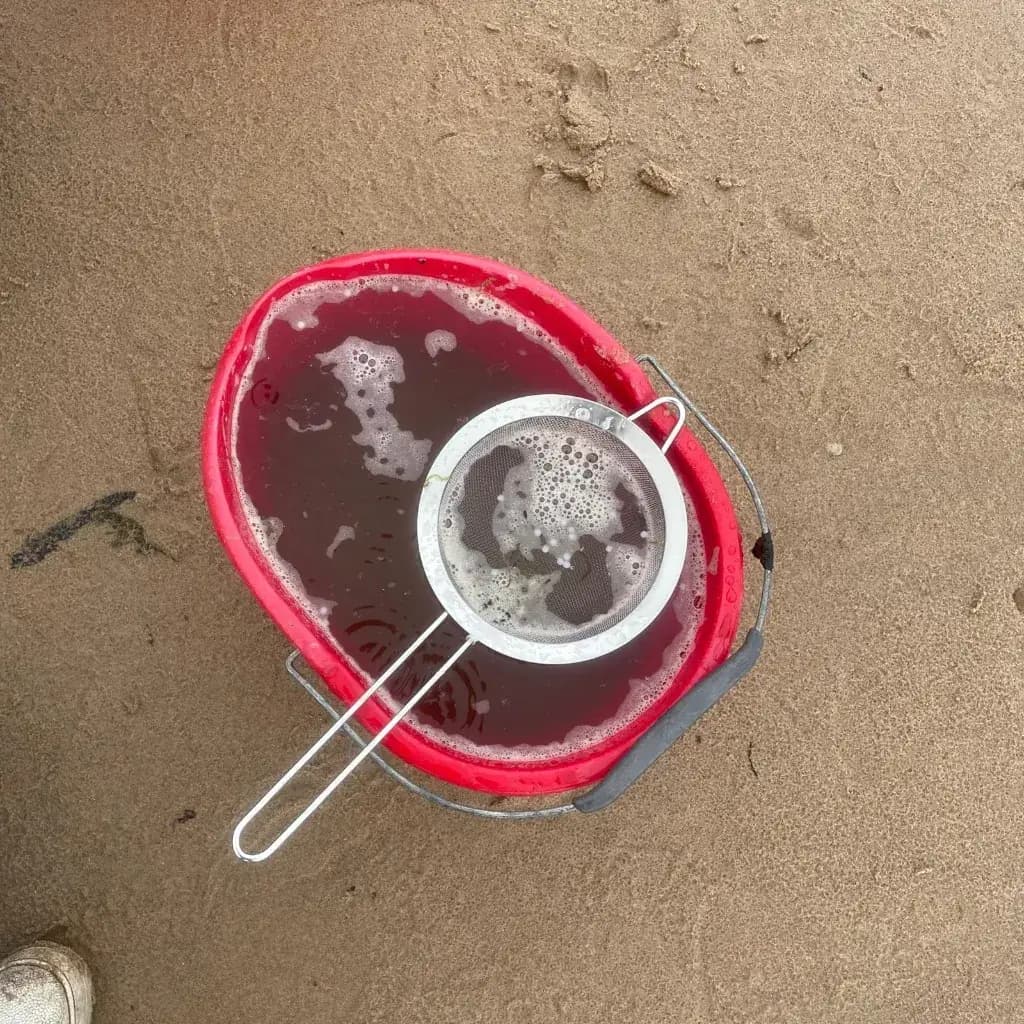
Bucket and sieve method
- Collect a bucket of sea water.
- Shovel sand (or seaweed) and nurdles mix into the bucket.
- When the nurdles float to the top, scoop them off with a sieve.
- Add the nurdles to a strong bin bag.
- When your bucket is full of sand, empty and refill with sea water.
- Shaking the seaweed releases the nurdles — then scoop them up and remove the sand.
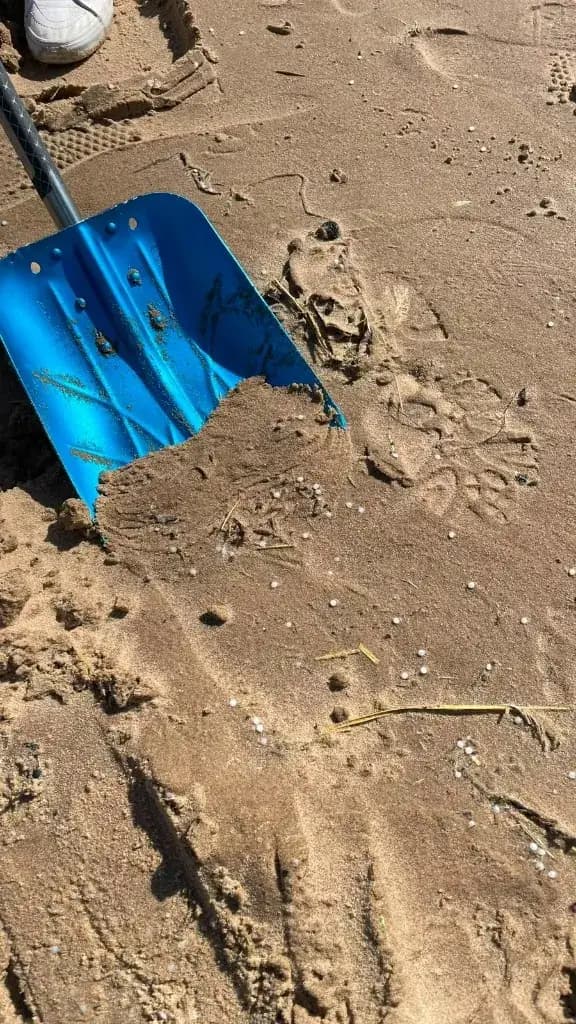
Spade and mesh bag method
- Scoop the top layer of sand and nurdles with a spade.
- Put the mix into a mesh bag and wash it in seawater so sand falls through and nurdles stay in the bag.
- Empty nurdles into a strong bin bag labelled as a volunteer collection.
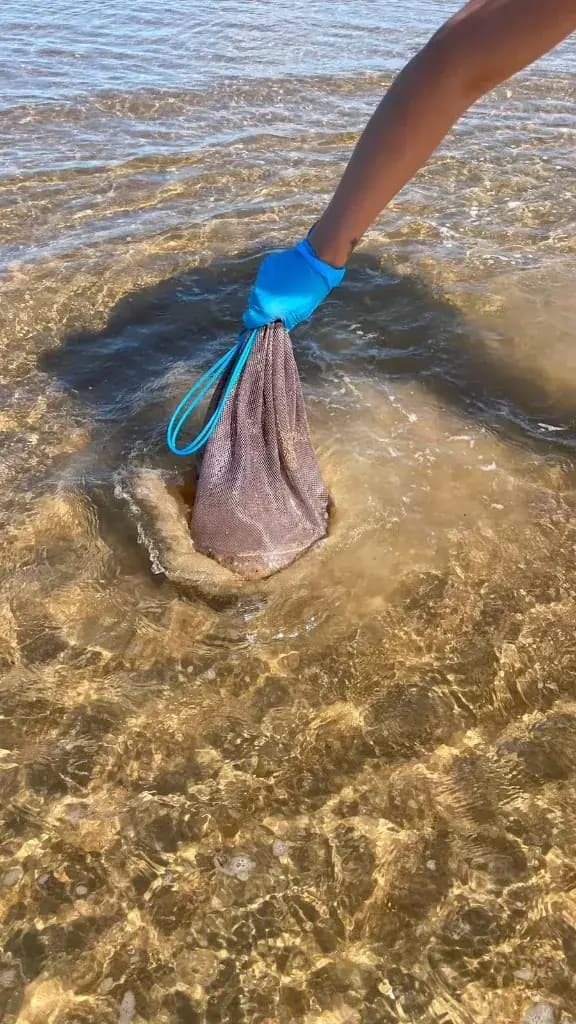
Sift nurdles in dry sand with mesh bag
Keep work manageable
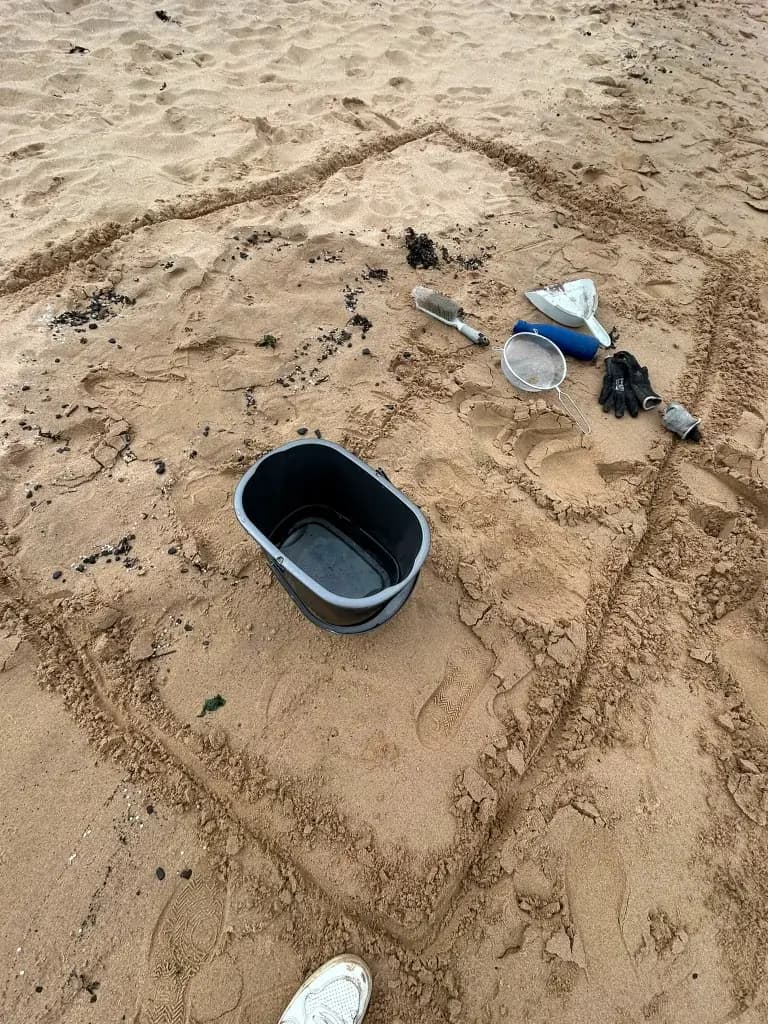
Draw a square in the sand to work on, complete it, move on and repeat. Keeps the task bitesize and measurable.
Mesh bag tutorial
This quick video provides guidance on sewing mesh bags to filter out the sand and seawater, leaving the plastic pellets in the bag. We have a dedicated WhatsApp group for volunteers sewing mesh bags.
Mesh bag WhatsApp group
FAQs
Is it safe to collect?
Environment Agency advice has been not to touch, which is why no organisation can officially lead. Community volunteers are still collecting at their own discretion. Check weather and tides, and leave if conditions feel unsafe.
Where do filled bags go?
Community organiser advice is to collect in heavy-duty bin bags and place them next to the council bins. Make sure the bags are clearly labeled as having been volunteer collected. Join the WhatsApp group for the latest method discussion.
When should I go?
There is an unofficial request for help specifically on Monday and Tuesday. Check tide times and the WhatsApp group before you travel.
How do I press the council to do more?
Write to your MP, your councillor and the Mayor — all three. Ask for a large-scale tide-based cleanup with proper numbers and equipment. Include your name and address at the top.
Who runs this cleanup?
No organisation is officially leading this while EA advice restricts action. This is a community volunteer effort. This page is not an official council or emergency-service site.